
Bell’s Healthcare Dual Action Chesty Cough Oral Solution treats chesty coughs. Its active ingredient, diphenhydramine hydrochloride, helps repress raspy, chesty coughs by inhibiting receptors the brain. Ammonium chloride (an expectorant) loosens mucus and lessens common cold symptoms, including sneezing, runny noses, and watery eyes. Bell’s Healthcare Dual Action Chesty Cough Oral Solution is suitable for adults and children aged 12 or over, and contains diphenhydramine hydrochloride and ammoniu
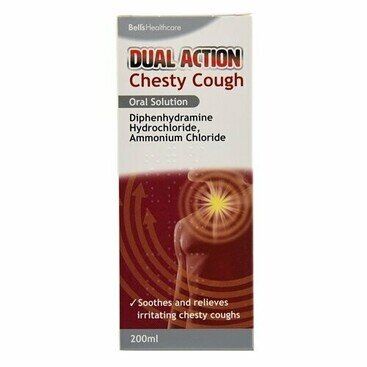
BELL’S OTC medicines cough & cold remedies dual action chesty cough liquid 130mg/5ml/14mg/5ml 200ml
$3.29
Availability: Out of stock
0 views this product.
Estimate delivery times: 12-26 days (International).
Return within 30 days of purchase. Taxes are non-refundable.
Guarantee safe & Secure checkout

Side Effects
Common side effects includeFeeling tiredFeeling drowsyFeeling weakFeeling dizzyFeeling sickBeing sickUpset stomachStomach acheDiarrhoeaConstipationThicker mucusDryness of the nose, eyes or mouthFeeling hungrierSerious side effectsVisual disturbancesTinnitusHeadacheLight sensitivityRapid heartbeatPalpitationsTightness of the throat or chestReduced blood pressureNumbness or tingling in the feet or handsConfusionProblems urinatingFeeling excitedTrouble sleepingAnxiousnessIrritationWorryHallucinationsMuscle twitchingImpaired performance when driving or workingA mental disorder (psychosis)Lack of coordinationMovement disordersSeizures (fits)TremorsHivesIf you notice any of these more severe side effects, seek medical attention immediately.More severe (rarer) side effects:Extreme vomiting and nauseaRashes on the s
FAQ
Why is diphenhydramine used in cough and cold remedies?
Diphenhydramine is a type of antihistamine. It helps lessen common cold symptoms, like scratchy, chesty coughs together with runny noses, sneezing and watery eye symptoms through its action in the brain.
What is ammonium chloride?
Ammonium chloride is an expectorant that acts on the bronchial mucosa. This triggers respiratory tract fluid production.
Why is ammonium chloride used in cough and cold remedies like Bell's Healthcare Dual Action Chesty Cough Oral Solution?
Ammonium chloride is an expectorant because of its irritative activity on the bronchial mucosa. This effect induces the production of respiratory tract fluid, which then promotes a productive cough.

%20loosens%20mucus%20and%20lessens%20common%20cold%20symptoms,%20including%20sneezing,%20runny%20noses,%20and%20watery%20eyes.%20Bell’s%20Healthcare%20Dual%20Action%20Chesty%20Cough%20Oral%20Solution%20is%20suitable%20for%20%5B…%5D&media=https://pharmacyblackmarket.com/wp-content/uploads/2026/06/BELLS-OTC-medicines-cough-cold-remedies-dual-action-chesty-cough-liquid-130mg5ml14mg5ml-200ml.jpg)
Reviews
There are no reviews yet.